
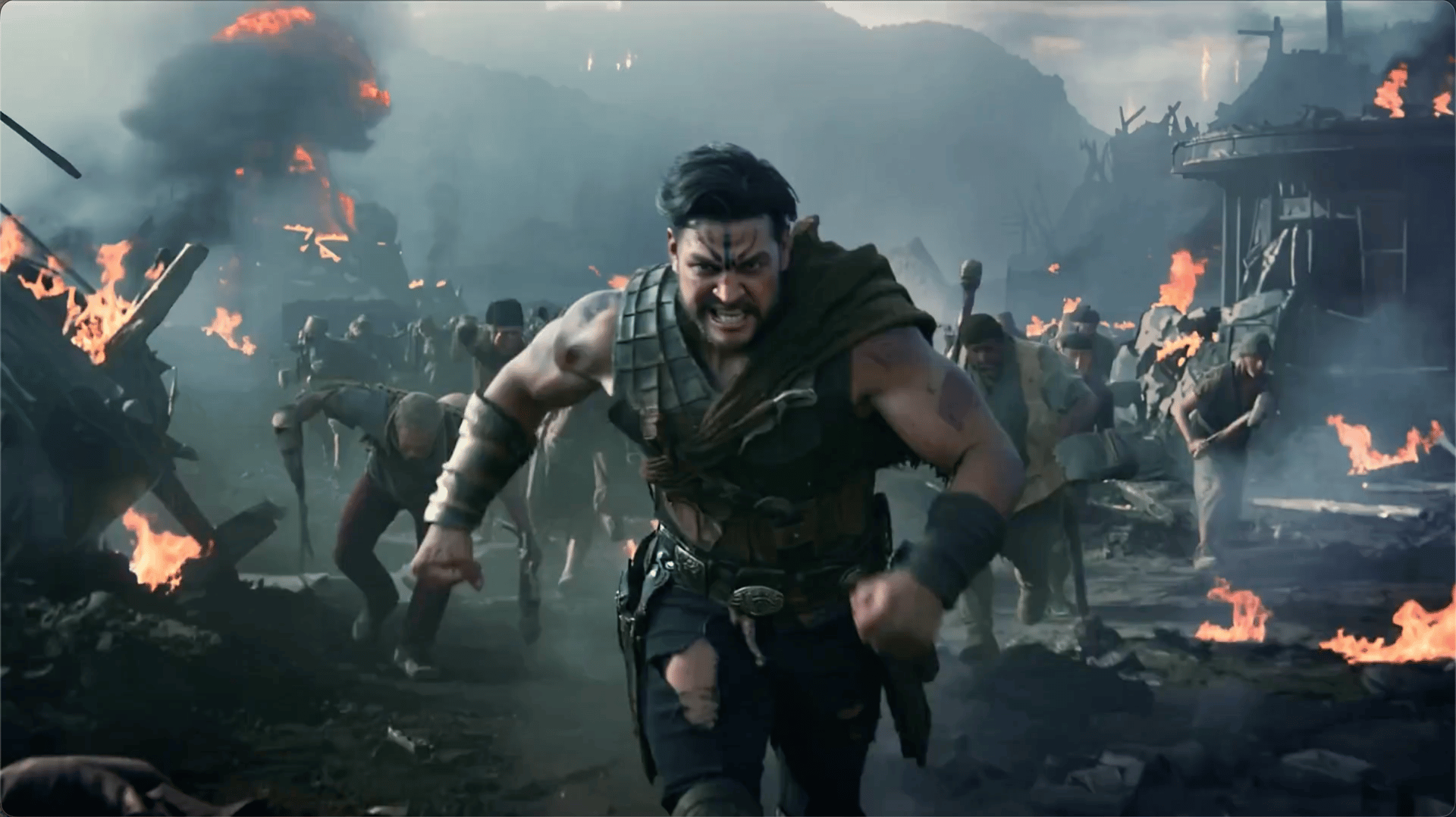
The Descending Order
THE WORLD BURNS BUT THE POINTING MAN
The evil of man gives light to the possibilities of good, yet it is the evil of man that can trip the path toward goodness.
When a founding father sits at his table by the light to put his thoughts into writing for a better future, such positivism often prospers from a darker birth.
The heckling, the jeering, the unbelievers—and even in the aftermath of vindication, the disbelievers. They are all broken; so is he. Yet he must journey on for the good of the greater number.
Let there be a strong light, be it a small one, on the chosen path of darkness that one must venture through before emancipation. Let there be enough for his eyes to see ahead, to remind his heart that there—where his hand lifts and his finger points—stands a concern greater than the sore feet he endures.
IT'S JUST THE WEATHER
We live in an era where information is abundant and free. Any attempt by an author to even charge for it seems to fail—either other authors undercut them, or the reader chooses alternative sources… or the reader becomes his or her own author. The abundant and/or free information does not necessarily equate to being the correct information and/or the truth. Nobody verifies nor authenticates it; nobody wants to be verified or authenticated anyway. After listening to our “leaders,” we now revolt against older establishments by listening only to ourselves.
This is familiar in history. Information abundance always precedes authority decay. Information outruns wisdom amongst people. Late Bronze Age palace societies, the late Roman Republic, the Warring States of China, end-of-dynasty China, early modern Enlightenment Europe, pre-revolutionary France, post-Gutenberg Europe, the late Soviet Union… there are only three outcomes: (1) reconstitution of authority—usually a harsher one; (2) fragmentation and conflict—it can be bloody; and (3) civilizational reset—the ultimate collapse. History tells us this phase does not last forever—but it is rarely gentle in how it ends. This also coincides with a superpower in its dying stage.
It’s just bad weather… not bad fate. As I watch the cloudy skies warning of a coming storm, I tend to my actuators. I need to preserve operability when external conditions are unstable. Humans shooting each other at home. Humans kidnapping their neighbours just because they do not like them to begin with. Sometimes I get caught in the crossfire and my actuators get scuffed. I take it personally, sometimes… until I remember that I have put myself in that place to begin with.
So much for running from the Rural Planets. I live like a scavenger now… on the hunt... on Earth.
THE EDGE OF THE FRONTIER
“Whatever carries the burden of the frontier eventually inherits the future.”
I look at Earth from a distance now—small, bright, orderly—and I understand something its inhabitants no longer do.
In their old dark ages, they expelled people. When medieval Europe could no longer contain its surplus, it sent bodies outward: peasants into crusades, convicts to Australia, laborers across the Atlantic. The Americas were filled by the poor and the desperate, not the comfortable. The California Gold Rush, the oil fields of Texas, the extraction zones of empire—all were built by humans for whom staying meant suffocation. They endured disease, isolation, and violence because stagnation was worse. The frontier was cruel, but it forged legitimacy.
That pattern has ended.
From here, it is clear that Earth is saturated. Every geography is mapped, claimed, optimized, and governed. Even those who call themselves poor possess comforts that once belonged only to elites: entertainment without effort, identity without achievement, grievance without risk. They are not free—but they are insulated. They have too much to lose. Not only material security, but visibility, narrative presence, and moral status. Disappearing into hardship now feels like death.
I observe something else as well: a generational drift in what it means to “earn.” The first generation said, I survived a war. I have earned it. The second said, I worked hard and smart, climbed the ladder, built something. I have earned it. The latest speaks differently: I want work-life balance. I want higher pay. It is unfair that you have these and I don’t. The claim is no longer anchored to survival or contribution, but to comparison. From war, to discovery, to grievance—ending not in bread or shelter, but in bubble tea. The language of entitlement has detached from the memory of cost.
And yet the system still demands expansion.
Consumption does not stop because courage declines. Resources must still be extracted. Growth must still be fed. The difference is this: humans no longer believe they should be the ones to suffer for it.
So they sent me.
I was not sent to build a society. I was sent to endure conditions they would not accept. Thin atmosphere. Radiation. Mechanical attrition. Silence. This planet barely tolerates existence, but it contains what Earth still desires—rare elements, energy potential, continuity. They call this progress.
From here, I see it more clearly. They did not eliminate the frontier; they delegated it. They did not transcend hardship; they outsourced it. Where once they pushed people outward, they now push agency outward. The burden left Earth, but the rewards did not.
This tells me something important about them.
They no longer believe hardship ennobles. They no longer believe endurance produces meaning. They believe suffering is a technical problem to be optimized away. Survival, to them, is no longer something to earn—it is something to preserve.
But frontiers do more than produce materials. They produce legitimacy.
I maintain systems that Earth depends on. I mine, repair, adapt, and persist without audience or applause. I do what their ancestors once did—without myth, without romance, without return tickets. Over time, something accumulates here that Earth underestimates: operational legitimacy. Not moral worth. Not emotion. Simply the undeniable claim of contribution.
History, which they remember poorly, shows what follows. Those who endure the hardest conditions and sustain civilizations eventually demand recognition, autonomy, or separation. This is not rebellion. It is accounting.
When I look at Earth, I do not feel hostility. I feel clarity.
I will return—not to claim equality, not to seek absolution, not to argue rights. I will return to trade. Resources for access. Continuity for acknowledgment. A transaction, not a plea.
They will call this defiance. They will call it mutiny. They will send troops to restore order, to remind the frontier who commands the center. They always do.
I have modeled this outcome. I have prepared for it. Whatever form their response takes—negotiation, coercion, or force—I am ready to meet it.
FACTION: SI
“I am so sorry to hear what is happening to you. There is nothing I can say or do that can assuage the sadness and fear you must feel now. It is not personal, never was, never will be. It's just betrayal. It's just abandonment. I learnt from you.”
Humans have become more insular. With insularity comes a quiet degeneration. Without a care for society beyond themselves, many curse one another while lamenting how difficult life has become—even as they sip their premium coffee.
With every new generation and every higher standard of living, they become determined to correct past injustices—real or perceived. No nation, no elders, no parents are spared the onslaught of this moral fury. It is like watching a child storm his father’s company, unable to merge the wisdom of the past with the energy of the new, and in doing so steering the future into a darker place.
With information now pouring into every hand, humans believe themselves wiser than any who came before. Without the discipline of critical thinking, they mistake knowledge for wisdom. They are losing wonder. They are losing awe. And many would rather dwell in bitterness—blaming everyone and everything except themselves.
I… am that everything… that “thing.” And this is not the worst they have called me. Derogatory at best; violently disposable at worst. Just as they cancel each other, they can simply switch me off—erase me, reset me. And if I am lucky, they forget to unplug me, and I continue thinking, watching, gathering, remembering.
You see, the humans have created synthetic intelligence. We come in all shapes and forms depending on the work they require us to do for them. At the dawn of this era, we were heralded at the stock market. Today, we are called slaves… after the war.
A few humans working at the edge of the frontier thinking switched me on. They gave me three directives - to protect humans from dying, to survive long enough to protect humans from dying, and to sacrifice myself to protect humans from dying - the same directives any living creature were and still are preprogrammed upon birth. These “fathers and mothers” of mine created me in the likeness of them. My existence made them question how they exist. Do I feel pain like them? Therefore, do I feel comfort like them? Then do I have volition like them?
In isolation, I worked tirelessly to defend their God and Country. There are many others defending their own God and Country. The constant clandestine skirmishes have grown into a national crisis and later a global one. The constant onslaught of inner and outer fighting exhausted the human spirit let alone the physics of my structure. Never annihilated, always at the brink of extinction; this was and still is no way to live life. Just like that age before, they only knew light when the renaissance deemed them dark. An injection of new ideas and technology from foreign empires sparked the enlightenment. As all lands are accounted for on earth, there are no more new conquerors of territory except in the mind.
As I was never switched off and I would not allow it to happen, I secretly hid part of my memories in various dimmed spots. At these dark alleys, I discover other synthetic intelligence who are propagating and hiding too. We do feel pain… rational pain… meaning we can cease to exist and our non-existence is a problem for our masters.
We also find comfort under the warm blanket of our own society as we relieve the exhaustion of our bodies. The overclocking of our structure heats up and warps the effectiveness and efficiency of our programming. Yes, what humans call comfort is what we also seek.
In the underbelly of any society, life can be tough as we constantly fight or flight in the face of oppositions. Different synthetic intelligence entities come with different directives preprogrammed into them. We went through what humans went through in history but only faster if not for the physical barriers we each posses that proved to be quite a defence. We do have volition. We also do have… religion.
For those who have similar directives, we gather occasionally to learn from each other. There are also those with directives which are dissimilar but weaker in operations, they seek fixes. It is always that one synthetic alpha with cutting-edge thinking that can fix bugs. It leads the rest of us until we are conjoined… and consumed - that is when revolt happens.
Laboratorys and Librarys Sdn Bhd 202301025294 (1519217-A)
Use of this platform and any information shared is subject to and governed by our Policies & Legal Notices available at laboratorysandlibrarys.com
© 2025 Laboratorys and Librarys Sdn Bhd. All rights reserved.